
CBD for Beginners: Your Essential Guide to Understanding Cannabidiol
Feeling a little lost in the world of CBD? You’re not alone. With all the buzz surrounding cannabidiol, it’s easy to feel overwhelmed by the jargon and conflicting information. But don’t worry, we’re here to demystify CBD for you. This guide is your starting point, designed to explain what CBD is, how it interacts with your body, and what makes it different from other cannabis compounds.
What Exactly is CBD? (Cannabidiol Explained)
Let’s start with the basics: CBD, short for cannabidiol, is one of over 100 cannabinoids found in the cannabis plant. Unlike its more famous cousin, THC, CBD is non-intoxicating. This means it won’t get you “high.” Instead, many people report feeling a sense of calm and balance without any mind-altering effects.
So, where does CBD come from? It’s primarily extracted from hemp, a variety of the cannabis plant specifically cultivated to contain very low levels of THC. While marijuana also contains CBD, the CBD products you typically see on the market are derived from hemp due to legal distinctions. (For a deeper dive into the legal landscape, check out our guide on CBD Legality.
How CBD Works: The Endocannabinoid System (ECS)
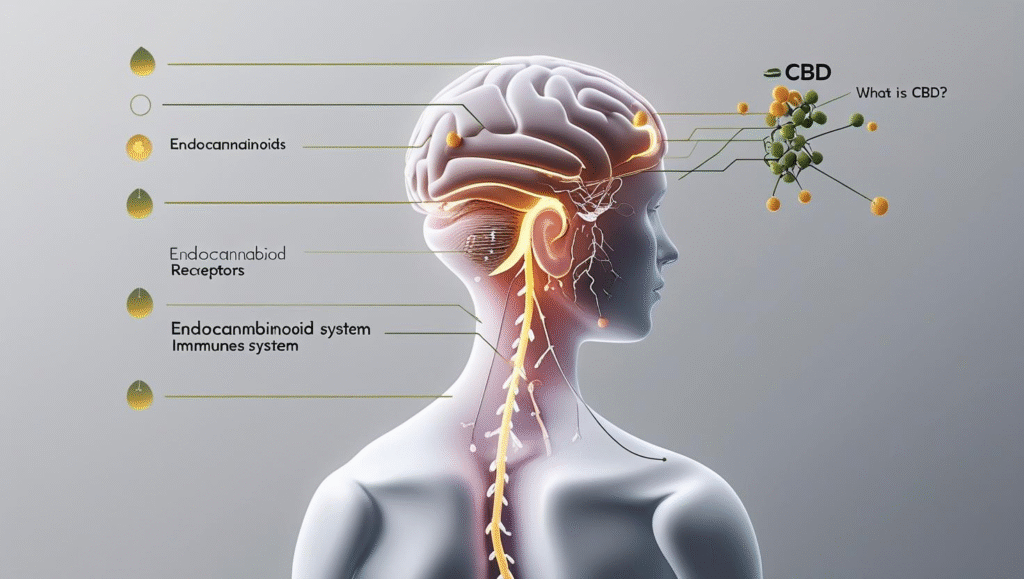
This is where it gets really interesting! CBD doesn’t just work in a vacuum; it interacts with a complex internal system in your body called the Endocannabinoid System (ECS). Think of the ECS as your body’s master regulator, constantly working to maintain balance, or homeostasis.
The ECS is made up of three main components:
- Endocannabinoids: These are cannabis-like molecules naturally produced by your body.
- Receptors: Located throughout your body (like CB1 and CB2 receptors), these are where endocannabinoids (and cannabinoids like CBD) bind.
- Enzymes: These break down endocannabinoids once they’ve done their job.
Instead of directly binding to receptors like THC does, CBD is thought to interact with the ECS indirectly. It may influence the activity of receptors or even slow down the breakdown of your body’s own endocannabinoids, thereby enhancing their effects. This indirect interaction is key to how CBD supports overall wellness. To learn more about this fascinating system, explore our in-depth Endocannabinoid System Guide.
CBD vs. THC: The Crucial Differences
This is perhaps the most common question newcomers have, and for good reason. While both CBD and THC are cannabinoids found in the cannabis plant, their effects on the body are vastly different.
Here’s a quick comparison:
| Feature | CBD (Cannabidiol) | THC (Tetrahydrocannabinol) |
| Psychoactivity | Non-intoxicating (does not cause a “high”) | Intoxicating (causes a “high”) |
| Primary Source | Hemp (specifically bred for low THC content) | Marijuana |
| Legality | Federally legal in the US if derived from hemp and < 0.3% THC | Federally illegal in the US, legal in some states for medicinal/recreational use |
It’s crucial to remember that legal hemp-derived CBD products contain less than 0.3% THC. This trace amount is not enough to produce any intoxicating effects.
Common Forms of CBD Products (Quick Overview)
One of the great things about CBD is the variety of ways you can incorporate it into your routine. While we’ll only touch on them briefly here, you’ll find CBD in:
- Oils/Tinctures: Taken sublingually (under the tongue) for fast absorption.
- Gummies & Edibles: A tasty and convenient way to consume CBD.
- Topicals: Creams, balms, and salves applied directly to the skin for localized relief.
- Capsules: A precise and discreet way to take CBD.
For a comprehensive look at all the options available, check out our Types of CBD Guide.
Potential Benefits of CBD
While research is ongoing, many people turn to CBD to support general wellness and address specific concerns. While we can’t make any medical claims, anecdotal evidence and preliminary studies suggest CBD may help with:
- Promoting a sense of calm and relaxation
- Supporting healthy sleep cycles
- Aiding in discomfort management
To dive deeper into the exciting potential of CBD, explore our CBD Benefits Guide.
Getting Started with CBD: Next Steps
Ready to give CBD a try? Here are some essential tips for beginners:
- Start Low, Go Slow: Begin with a small dose and gradually increase until you find what works best for you. Everyone’s body responds differently.
- Look for Third-Party Lab Testing: Reputable CBD brands will provide easily accessible third-party lab reports (Certificates of Analysis or CoAs) for their products. These reports verify the CBD content, confirm THC levels are below the legal limit, and ensure the product is free of contaminants. This is a non-negotiable step for your safety and to ensure you’re getting what you pay for.
For more detailed guidance on navigating the market and making informed choices, please take a look at our How to Choose CBD Guide.
Conclusion
We hope this essential guide has helped clarify some of the mystery surrounding CBD. From understanding what cannabidiol is and how it interacts with your unique endocannabinoid system, to differentiating it from THC, you’re now equipped with the foundational knowledge to begin your CBD journey with confidence. Remember, the world of CBD is vast and continuously evolving, so keep learning and exploring!
Ready to learn more? Explore our full range of CBD Guides!
Would you be ready to start? Explore our full range of CBD Products!
